I used to roll my eyes at the word gratitude.
Not because I didn’t want to be grateful. I wanted to be one of those glowy, calm, zen humans who sipped herbal tea at sunrise and smiled at clouds. But I wasn’t. I was the opposite: juggling a million tabs (mentally and digitally), always forgetting where I put my phone, and feeling like I was three steps behind in life—especially as a creative, neurodivergent mom living in rural Japan, running several businesses, trying to homeschool, and still forgetting to drink water.
And then came gratitude journaling.
Spoiler: it didn’t magically fix everything. My brain is still chaotic and my journal still has tea stains on it (since i stopped drinking coffee as it makes me sleepy) . But it did create a quiet shift in how I experience my days.
This post isn’t going to tell you to wake up at 5 am or list 10 things you’re thankful for every morning in perfect cursive. It’s not that kind of advice. I’m just going to share what worked for me, what didn’t, and why gratitude journaling might be the little reset button your brain is craving.
What Is Gratitude Journaling?
Let’s keep it simple.
Gratitude journaling is the practice of writing down things you’re grateful for. That’s it. No fancy planner required. No rules. Just noticing something good—even if it’s tiny—and putting it on paper.
It can look like:
- “My daughter’s giggles while brushing her teeth.”
- “The weird but delicious soy sauce ice cream we sold out of today.”
- “I wasn’t scared to reply to that email (finally!).”
It doesn’t have to be deep or poetic. In fact, the messier and more honest it is, the better it works.
Why It Works—Especially If You Have an ADHD Brain
My brain is a constant ping-pong match of ideas, emotions, forgotten tasks, and occasional existential dread. (Fun!)
And for people like me, who live in that neurodivergent chaos, gratitude journaling is like anchoring a balloon to the ground. It doesn’t stop the wind, but it keeps you from flying off into the clouds.
Here’s why it’s powerful:
1. It Trains Your Brain to Look for the Good Stuff
ADHD brains tend to hyperfocus on problems. We’re experts at spotting what went wrong, what we forgot, what we should have done better. Gratitude shifts the lens. It’s not toxic positivity. It’s like saying, “Hey, brain, I see you spiraling, but let’s not forget that one tiny thing that went okay today.”
2. It Interrupts Overthinking
I can go from “I forgot to text back” to “I’m a failure at life” in under 12 seconds. Gratitude journaling breaks that loop. Even writing one thing I’m grateful for is like slamming the brakes on a runaway thought train.
3. It Helps You Remember What Actually Matters
When I look back at my gratitude journal, I’m never grateful for money, or productivity, or crossing off to-dos. It’s always:
- Cold water with ice in the sun.
- My kid singing and dancing made-up songs.
- A cuddle from my dog at the right moment.
That’s a perspective shift I didn’t know I needed.
How I Actually Do It (Spoiler: Not Every Day)
I wish I could tell you I journal at the same time every morning in a perfectly styled notebook with pastel washi tape. But the truth is:
- Some days I write one sentence.
- Some days I write two pages.
- Some days I forget for a week and come back in a month’s time.
And that’s okay.
Here are the main ways I fit it into real life:
1. Gratitude in the Margins
Sometimes I just scribble three things I’m grateful for in the corner of my to-do list. Nothing fancy. No structure. Just:
- I got to sew something and didn’t mess it up.
- Found a podcast that was super interesting and full of new information.
Done.
2. Voice Notes or Phone Apps
When I’m walking or cooking or hiding in the bathroom (because parenting), I sometimes record a voice memo: “Okay, today was hard, but I’m grateful the rain stopped before I had to walk to the post office.”
Later, I’ll either write it down or just keep the recording. No rules.
3. Gratitude Dump
This is like a brain dump, but only the good stuff. I set a timer for five minutes and write every positive thing I can think of from the past 24 hours. Doesn’t matter how small.
Try it. You’ll be surprised what spills out.
What to Write When You Don’t Feel Grateful at All
Let’s be honest—some days suck. You’re tired. Burnt out. Stuck in comparison mode. Or life just throws five unexpected bills and a tantrum your way before breakfast.
On those days, gratitude journaling isn’t easy. But that’s when it matters most.
Here’s what I do when everything feels meh:
Start with the Bare Minimum
Literally:
- I’m breathing.
- I have tea.
- I made it through the day.
That’s enough.
Write “I’m grateful I get to…”
Even if your brain is in full resistance mode, this simple reframe can help.
Instead of:
“I have so much laundry.”
Try:
“I’m grateful I get to take care of my family.”
Instead of:
“I’m exhausted from my business.”
Try:
“I’m grateful I get to build something I care about.”
It’s cheesy. But it helps. Truly.
What Gratitude Journaling Has Actually Done for Me
After almost a year of on-and-off gratitude journaling, here’s what I’ve noticed:
✦ I bounce back faster from bad days.
I still have meltdowns. I still overthink. But I recover faster. Gratitude helps me zoom out and remember that one hard moment doesn’t define my day—or my life.
✦ I feel less like a failure.
When my inner critic yells, “You’re behind on everything!” I can open my journal and see proof that I’m not. That I’m showing up. That I’m trying. That there’s good here, even if it’s messy.
✦ I sleep better.
Weird, right? But writing three things I’m grateful for before bed helps turn off the endless mental checklist. My brain relaxes just enough to stop looping.
✦ I notice beauty more often.
Birdsong. Light through trees. These little things used to blur into the background. Now I see them—and write them down.
Gratitude Journaling Prompts (for When You’re Blank)
If you want to start but your brain goes totally blank (been there), here are a few prompts I love:
- What made you smile today?
- What are you grateful your past self did for you?
- Who made your day easier this week?
- What small comfort did you enjoy recently?
- What’s something you often take for granted?
- A challenge that taught you something?
- A sound or smell that makes you feel safe?
- What’s something you’re grateful didn’t happen?
- A place that makes you feel peaceful?
- What are you proud of yourself for today?
How to Make It a Habit (Without It Feeling Like a Chore)
You don’t need a 30-day tracker or a bullet journal spread (unless that helps you).
Instead, try these ADHD-friendly, low-pressure tips:
- Attach it to something you already do
Right after brushing your teeth. Before opening Instagram. With your coffee. Piggybacking makes it easier. - Leave your journal in sight
Out of sight = out of mind. Leave your notebook open on your desk or next to your bed. I have mine on the kitchen table. - Set a tiny goal
One thing a day. That’s it. Anything more is a bonus. - Use a timer
Five minutes. Done. No pressure to write pages. Have a look at one of my posts about quick 5 minute journaling for a busy mind. - Create a ritual
Light a candle. Use a special pen. Play soft music. Make it something you look forward to.
My Favorite Gratitude Journal Tools (But You Can Use Scrap Paper Too)
You do not need to spend money to start. But if you’re a stationery nerd like me, it can be fun to make it special.
Here are some of my favorite things:
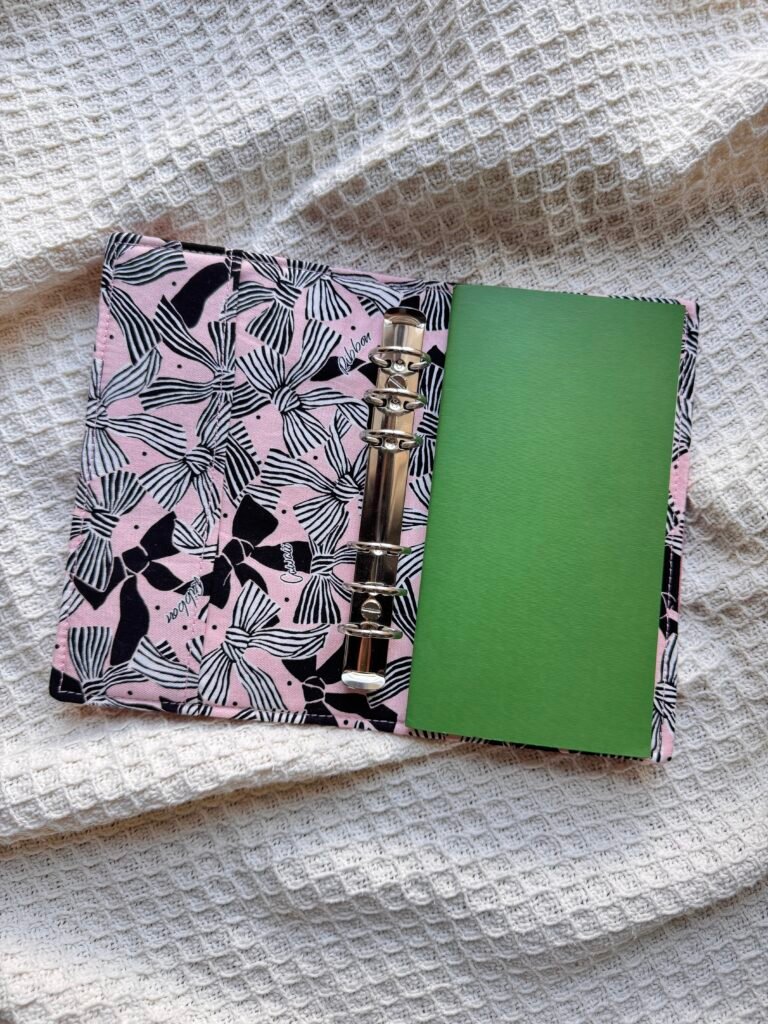
- A small A6 wide traveler’s notebook (yes, I make them!)
- Dot grid paper or mixed media paper (for doodling too)
- Washi tape + stickers for visual journaling
- Mildliners or brush pens ( or here are some that are already liners and brush pens in one)
- My favorite playlist or lo-fi background music
But honestly? A napkin and a pen will do.
Final Thoughts: Gratitude Is a Gentle Rebellion
In a world that constantly tells us to hustle, achieve, and keep striving… taking five minutes to slow down and say, “This small moment matters,” is radical.
Gratitude journaling isn’t about pretending everything’s perfect. It’s about noticing what is beautiful—even when everything else feels hard.
And if you’re like me—busy, scattered, neurodivergent, and always chasing ten different dreams—it’s one of the simplest tools you can use to come back to yourself.
You don’t need to write a novel. Just one sentence.
Today, I’m grateful you’re here. Still trying. Still showing up.
That’s more than enough.