That Can Change the Way You Think, Feel, and Create
If you’ve ever found yourself scrolling Pinterest at midnight, drooling over messy, colorful pages filled with paint splatters, handwritten notes, and magazine cutouts — congratulations, you’ve met art journaling.
But here’s the thing: art journaling is so much more than making “pretty pages”. It’s messy therapy, personal storytelling, creative exploration, and even problem-solving — all in one notebook. It can be as quiet and meditative as watercoloring in soft blues, or as explosive as smearing neon acrylics over yesterday’s grocery list because today was just too much.
If you’ve never tried it before, or you’ve dabbled but feel intimidated by those perfectly staged Instagram spreads, let’s break it down. This is not a high-pressure, perfectionist’s art class. This is about you, your thoughts, and your hands making something real.
So, What Exactly Is Art Journaling?
At its core, an art journal is a place where words and visuals live together. Think of it as a cross between a written diary and a sketchbook — but without rules.
You can write, paint, collage, doodle, stamp, or even glue in pieces of packaging from your favorite tea. You can make it deeply personal or purely experimental.
An art journal might include:
- Hand-lettered quotes you love
- Layers of acrylic paint, pastels, or watercolor
- Magazine cutouts or photos
- Pressed flowers or leaves from a walk
- Mind maps or doodles of ideas
- Your actual written thoughts (hidden or bold and visible)
There’s no “correct” way to do it. You’re not aiming for something gallery-worthy — you’re aiming for something you-worthy.
Why Art Journaling Isn’t Just for “Artists”
I hear this all the time: “But I can’t draw, so I can’t art journal.”
Nope. Absolutely not true. Art journaling isn’t about skill, it’s about expression. You could make every page with stick figures and glued-on receipts, and it would still count.
In fact, the more you let go of the idea that you have to be “good” at art, the freer you’ll feel. The point is to use your pages to explore feelings, experiment with colors, try things that might look terrible — because in an art journal, nothing is a failure.
Here’s the secret: your brain doesn’t care if it’s “good art.” What it cares about is that you’re actively creating, processing, and exploring.
The Magic of Art Journaling for the Mind
Here’s where I get a little passionate — because art journaling can actually change you. And no, I’m not being dramatic.
1. It Helps You Process Emotions
Ever tried explaining how you feel but words just… don’t work?
That’s when you grab your art journal. A messy splash of red paint might say more about your frustration than a full page of writing. A soft pencil sketch of a quiet window might capture your longing better than you can put into words.
2. It Lowers Stress
Art-making shifts your brain from “fight or flight” mode into a more relaxed, present state. Your focus narrows to this brushstroke, this piece of paper, and suddenly that overthinking loop slows down.
3. It Boosts Creativity Everywhere
The more you give yourself permission to experiment in your journal, the more you start thinking creatively in other areas of life. Decisions, problem-solving, even cooking dinner — you’ll find yourself seeing new possibilities.
4. It Becomes a Record of Your Life
Flipping through an old art journal is like stepping into a time machine. You see the colors you were drawn to, the words you wrote, the mood of that week — all without needing a detailed memory.
How to Start Art Journaling (Without Feeling Overwhelmed)
Here’s the good news: you don’t need fancy supplies to start.
You could literally grab a cheap notebook, a glue stick, and a pen. But if you want a more satisfying experience, here are the basics:
The Journal
- Mixed media notebook – handles both wet and dry media without warping too much.
- Sketchbook – great for dry work like pencil, collage, or markers.
- Traveler’s notebook inserts – perfect if you like working in smaller, more portable formats.
The Tools
- Pens or markers (even ballpoint works!)
- Acrylic paints, watercolor, or gouache
- Glue stick or double-sided tape
- Old magazines, patterned paper, or scrap fabric
- Scissors (bonus points if you have decorative edge scissors)
My Starter Tip:
Pick one small project for your first page — like writing down a quote you love and decorating around it. Don’t start with “perfect spread” pressure.
Different Ways to Use Your Art Journal
One of the most freeing parts of art journaling is that it can be anything you need it to be that day.
1. Visual Diary
Instead of only writing about your day, create a visual snapshot. Use color to represent your mood, paste in little mementos (ticket stubs, packaging, receipts), and let the page tell the story.
2. Inspiration Book
Fill pages with things that inspire you — colors, textures, quotes, sketches of ideas. This becomes your personal library of creative sparks.
3. Self-Reflection Space
You can use prompts like:
- “What am I feeling right now?”
- “If I could describe this week in colors, what would they be?”
- “Draw what’s been on my mind lately.”
4. Mixed Media Playground
Experiment with layering paint, collage, stencils, stamps, and textures. No goal — just play.
5. Goal Mapping
Combine vision board ideas with art journaling. Create visual representations of your goals alongside affirmations or action steps.
But… What If I’m Afraid of “Messing Up”?
Here’s the truth: there is no messing up in an art journal.
Every page — even the ones you hate — teaches you something. And here’s a little trick: if you really can’t stand a page, just glue another piece of paper over it and keep going.
The more pages you fill, the less precious each one becomes, and the freer you’ll feel to experiment.
When You’re Stuck, Try These Prompts
- Make a page using only shades of one color.
- Collage with scraps from your recycling bin.
- Write down your current favorite song lyrics and decorate the page to match the mood.
- Paint a page black, then add doodles on top with a white pen.
- Close your eyes and draw — then turn it into something.
What Art Journaling Can Do for You (The Deeper Side)
Here’s where it gets a little personal. Art journaling isn’t just “something nice to do” — it’s a way of hearing yourself more clearly.
For me, some of my biggest personal realizations have happened mid-page. I’ll be gluing down scraps, not thinking too much, and suddenly something clicks: Oh, that’s why I’ve been feeling off lately.
The act of making — moving your hands, mixing colors, arranging shapes — bypasses your overthinking brain and lets other parts of you speak.
It’s not always about solving a problem. Sometimes it’s just about being with yourself in a different, gentler way.
Final Thoughts (and a Gentle Push)
If you’ve been waiting for the “right” time to start art journaling, this is it. Not when you have the perfect supplies, or the perfect idea, or the perfect handwriting.
Start now. Start messy. Start with what you have.
And if you keep going, your journal will become something magical — a space that’s entirely yours, where your mind, heart, and hands meet.
Trust me, you’ll thank yourself later.
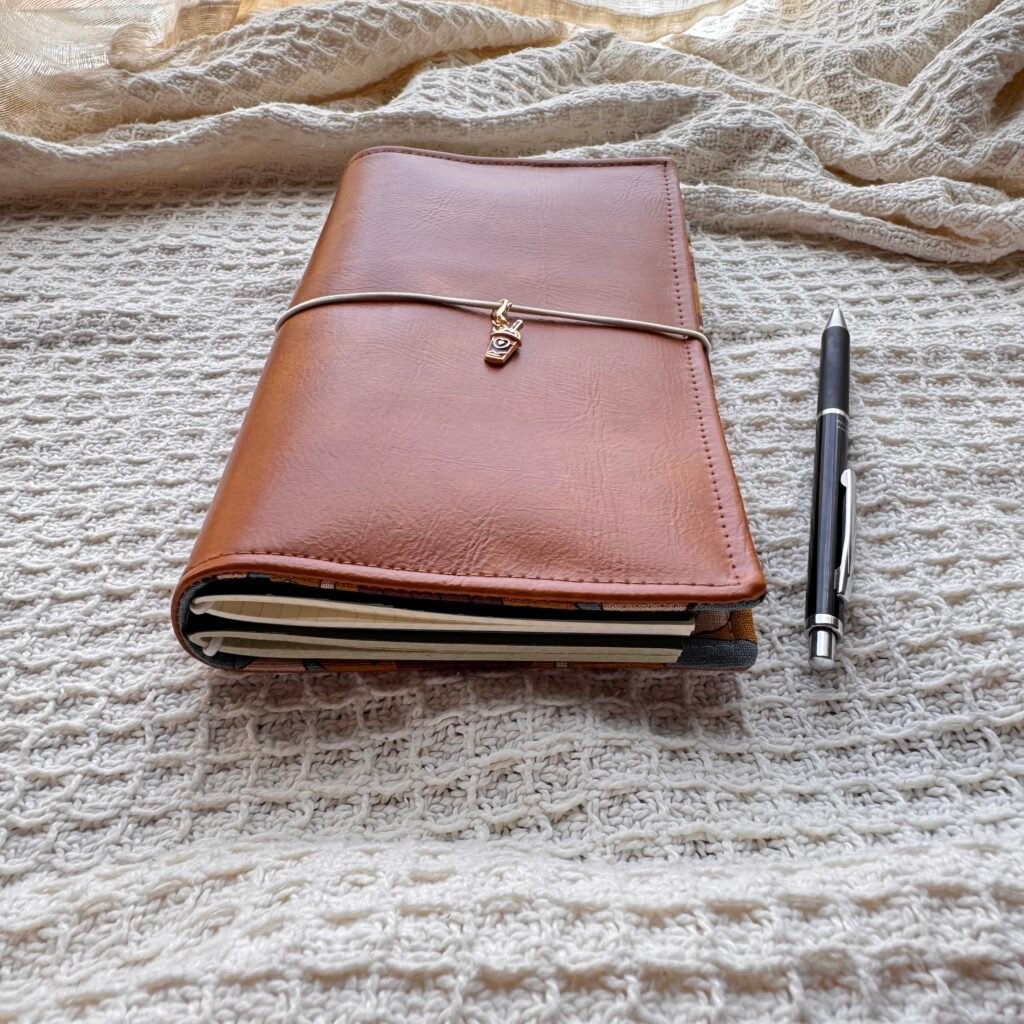
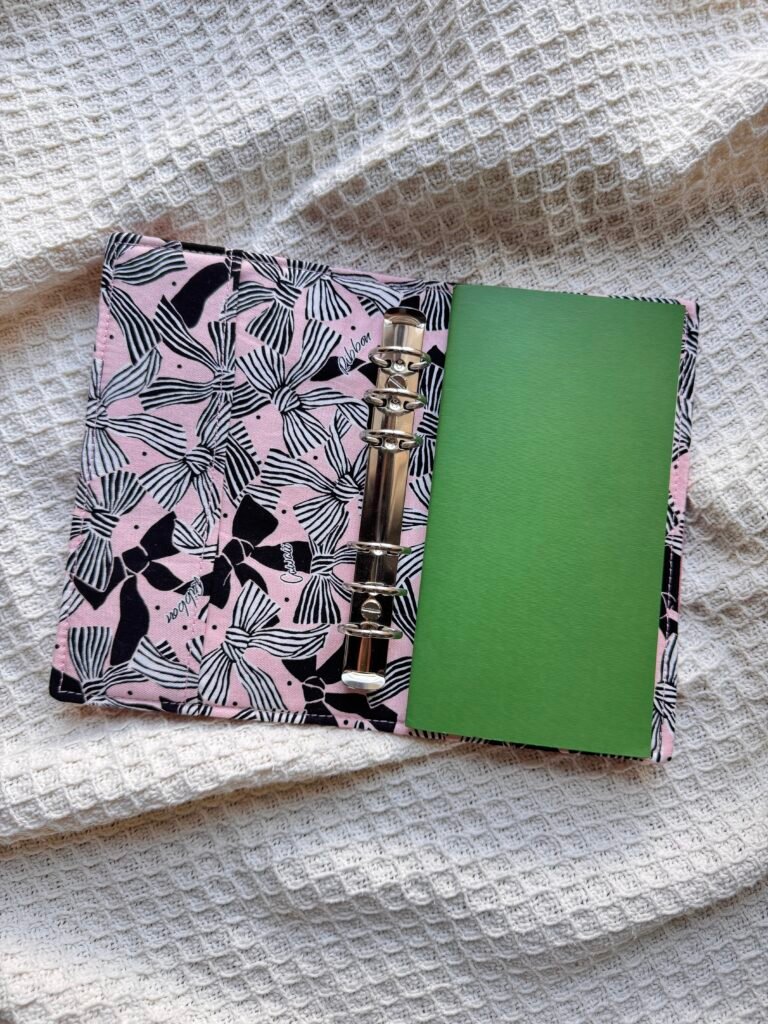
💡 Tip: If you want to try art journaling in a traveler’s notebook style cover (the kind I make), you’ll love how easy it is to swap out inserts and keep your favorite pages safe. Plus, if you’re a charm addict like me, you can even decorate the outside.
Subscribe to my newsletter
Join my creative corner ✨ Get journaling tips, fresh inspiration, and updates on new handmade covers straight to your inbox. No spam, just cozy inspiration.