What’s a Fauxdori? And Why I’m Absolutely Hooked on Making Them
Discover what a fauxdori is and why it’s a game-changer for journal lovers, creatives, and planner addicts. Learn the difference between a fauxdori and a Midori Traveler’s Notebook, explore creative uses, and get inspired by handmade fauxdori covers made from vegan, eco-friendly materials. Whether you’re a stationery addict or a DIY enthusiast, this guide is packed with fun facts and ideas to spark your next journaling obsession.
Okay, so here’s a term you might not have heard before: fauxdori. Sounds like a spell from Harry Potter, right? “Accio Fauxdori!” Poof—you’re holding the most fabulous handmade notebook cover ever.
Let me explain. If you’re into journaling, planning, memory-keeping, or you just love the feel of fabric and paper in your hands (hello sensory seekers), then welcome. You’re about to discover something that might just change your creative life.
So, what exactly is a fauxdori?
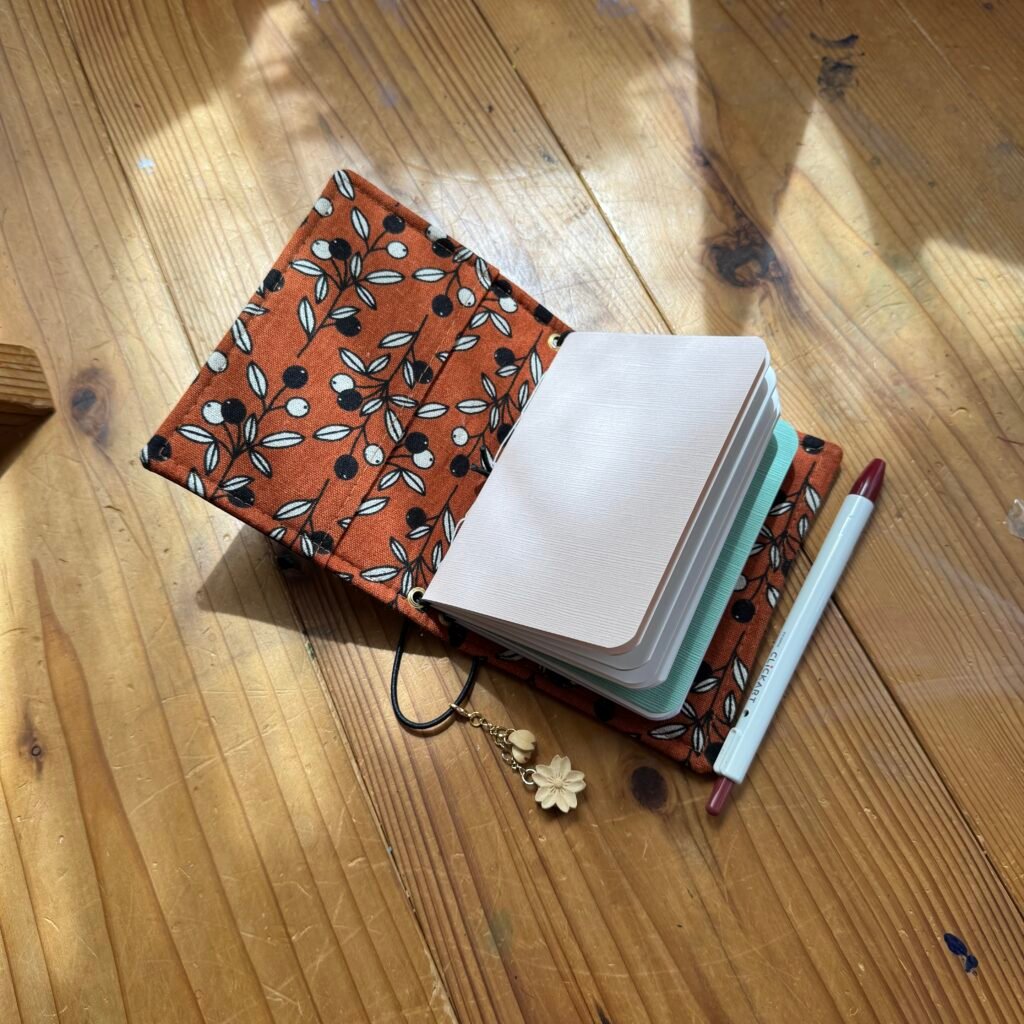
Imagine this: a notebook cover that holds multiple notebooks inside. You can mix and match inserts—blank, lined, dotted, watercolor paper, passport-sized, A6, whatever your heart desires. And it all stays together thanks to a simple but magical elastic band system. That’s it.
A fauxdori is essentially a handmade or DIY version of the original Traveler’s Notebook, formerly known as Midori. (Fun fact: Midori is actually the name of the company that first released these in Japan. They later rebranded as Traveler’s Company. So if you ever hear someone say “I’ve got a Midori,” now you know what they mean.)
And “faux”? That’s just the French word for “fake.” Because unlike the original Midori notebooks—which are typically made of beautiful, expensive leather—fauxdoris are often made from alternative materials: vegan leather, fabric, cork, recycled obi or kimono, or even old jeans if you’re feeling scrappy.
Why fauxdori? Why not just buy a Traveler’s Notebook?
Let me tell you—there’s nothing wrong with the original. They’re lovely. But fauxdoris? They let you go wild.
Want a galaxy-themed notebook cover with a space cat and glitter stars? You can make one.
Prefer a soft floral cork with gold foil and a matching pen loop? Done.
Or maybe you just want one with your cat’s face printed on it? I won’t judge.
With a fauxdori, you’re not limited to what’s in stock or what someone else thinks looks “professional.” You make the rules. Or, if you’re like me—you break the rules and wing it at midnight with a pile of fabric and a hot glue gun in your lap.
How I Got Hooked on Making Fauxdoris
Let’s rewind a little.
I’m Polish, I live in Japan, I have ADHD, and I have a mild-to-moderate obsession with beautiful notebooks. I also have a kid, two other small businesses, and a tendency to stay up too late because my brain gets its best (read: most chaotic) ideas around 11:42 p.m.
Sewing fauxdoris started as a creative outlet for me during a time when I felt pulled in too many directions. It was one of those projects that didn’t need a business plan, a goal, or even a Pinterest board. It just… made me happy.
And then, like all ADHD hyperfixations, it exploded. I went from making one simple fauxdori with cork fabric and a few elastics… to hoarding rolls of fabric, mixing textures like a mad scientist, and testing new insert sizes like a stationery sommelier. (You know, like “Ah yes, this sketchbook insert pairs nicely with a linen spine and a floral inner pocket.”)
The Magic of the Band System
I know it doesn’t sound exciting, but hear me out.
The elastic band system is everything. Imagine you have a folder that lets you slot in and swap out different notebooks—without any glue, binding, or bulky rings.
This means your fauxdori grows with you:
- Start with one notebook? Cool.
- Suddenly you need one for journaling, one for meal planning, and one for sketching your dream tattoo? No problem.
- Want to carry your passport and some stationery for your next trip? Easy.
Some systems even allow for four notebooks (or more, if you get creative). You can rearrange, rotate, or refill them endlessly. It’s modular journaling at its finest.
Materials I Love Using for Fauxdoris
This is where the fun begins. As a maker, I’m constantly sourcing new materials—and Japan is full of beautiful, unique options.
Some of my favorites include:
- Japanese cotton fabric with bold traditional prints like cranes, waves, or sakura blossoms.
- Recycled yukata or kimono fabric from flea markets—each one with a story and history.
- Vegan leather in juicy colors like plum, mustard, or forest green (and yes, I’m currently searching for the perfect red for a dramatic fauxdori project).
- Cork fabric, which is eco-friendly, soft, and surprisingly durable.
- Corduroy, because nothing says cozy journaling like a soft, textured red cover with a flower badge sewn on top.
Plus, I love adding little extras—like metal charms, sewn-on appliqué, inner pockets, or stitched labels. Each one becomes a little piece of functional art.
What Can You Actually Use a Fauxdori For?
I mean… what can’t you use it for?
Here are a few of my favorite ways to use mine:
Daily Journaling – Write out your thoughts, dreams, gripes, and gratitude.
Travel Notebook – Collect tickets, doodle that ramen you ate, scribble directions.
Creative Sketchbook – Add watercolor inserts or kraft paper for a tactile art journal.
Planner System – Track goals, lists, appointments… with stickers, if you’re like me.
Idea Dump Book – Because your brain has 45 ideas before breakfast.
And don’t forget: fauxdoris make beautiful gifts. Especially for that one friend who loves paper, makes 300 lists, and never finishes a notebook (we all have one, or are one).
Some Fun Facts You Didn’t Know You Needed
- The first Midori Traveler’s Notebook was released in 2006. It sparked a global planner craze.
- Some people name their fauxdoris (like pets). I once had one called “Mushroom Baby.”
- There’s an entire subculture on Instagram and YouTube devoted to “Fauxdori Setup” videos. It’s kind of addictive.
- I once made a fauxdori entirely from recycled fabric from a child’s yukata, and a customer told me it reminded her of her grandmother. Cue tears.
Why Fauxdoris Feel Kind of… Powerful
Look, I know it’s “just a notebook cover.” But for me? It’s more than that.
Fauxdoris represent creativity without pressure. Function without formality. They’re handmade, often a little imperfect, but full of personality.
And they give us something physical in an increasingly digital world. A space to hold our thoughts, our art, our nonsense, and our dreams. That’s kind of rare.
In a way, making fauxdoris feels like reclaiming time. Reclaiming creativity. Saying, “Hey world, I’m gonna take ten minutes to write about this weird dream I had instead of checking emails.” And honestly? That’s enough reason to keep making them forever.
Thinking About Getting One?
If you’ve never tried a fauxdori before, you’re in for a treat.
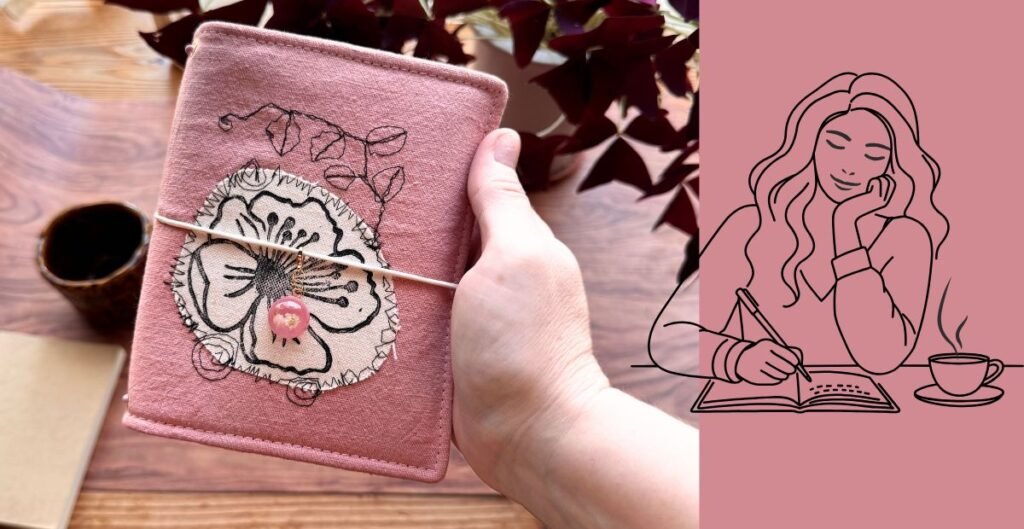
You can check out my shop to see the current collection—each one is handmade by me here in Japan, often with a cup of tea slowly going cold next to me (because I always forget to drink it while I’m sewing).
Every fauxdori I make is one-of-a-kind. I mix fabrics, match linings, test stitch strength, and sometimes even add a lucky charm or a recycled detail with a story.
Or… if you’re the DIY type? Go for it! Grab a piece of thick fabric, punch a few holes, add some elastic, and create your own. It doesn’t have to be fancy—it just has to be you.
If this post made you smile, gave you an idea, or inspired your next project—pin it, share it, or drop me a message. I love hearing about other people’s weird creative obsessions. And if you’ve got a fauxdori idea you’ve been dreaming of? Tell me. I might just make it.
Until then—stay creative, stay curious, and don’t forget your tea.
ps. Don’t know which notebooks/ inserts to put inside your cover? Not a problem check my favourite ones organised by size. When you click on the size that onterest you like it will take you to amazon page to show which one i like best.
Passport size notebook, A6 Size notebook, B6 size notebook, Regular size notebook, A5 size notebook.