Let’s be real: therapy isn’t always accessible. It’s expensive, it’s time-consuming, and sometimes, it feels emotionally overwhelming just thinking about opening up to someone else. But here’s what I’ve learned—>journaling can be therapy. It’s not a replacement for professional mental health care, of course, but it’s one of the most healing tools I’ve found in my chaotic, neurodivergent life.
There’s something raw and powerful about seeing your thoughts on paper. It’s like looking into a mirror you actually want to face. The kind that doesn’t judge you or rush you or try to fix you. And for those of us with ADHD, busy minds, or emotional overload, that kind of space? It’s pure gold.
In this post, I want to share why I believe journaling is a form of self-therapy—and how one tiny question from a podcast episode helped unlock a whole new level of healing for me.
What Even Is Self-Therapy?
Let’s demystify it. Self-therapy doesn’t mean sitting yourself down on a couch and saying, “So, tell me about your childhood.” It’s about creating moments of reflection and awareness that help you grow emotionally, mentally, and even spiritually—on your own terms.
For me, self-therapy often looks like curling up with my journal, a cup of tea, and letting the noise in my head pour out onto paper. I don’t follow a strict method. Some days I write paragraphs, some days it’s doodles and swear words, and sometimes it’s just a list of things I don’t want to forget.
And here’s the truth: every time I journal, I feel lighter. Not “fixed,” not “cured”—just lighter, clearer, more grounded.
Journaling Is a Safe Place to Be Unfiltered
One of the reasons journaling feels like therapy is because it’s safe. No one interrupts. No one offers unwanted advice. No one judges your mess. You get to be completely unfiltered—and for those of us who’ve been masking emotions or people-pleasing our way through life, that’s healing in itself.
I write things in my journal I’ve never said out loud.
I admit things I didn’t even know I was holding on to.
I tell the truth, and that truth sets me free—even just a little.
And that brings me to one of the most impactful journal prompts I’ve ever used.
“What Do I Wish I Hadn’t Done Today?”
In a podcast episode with Mel Robbins, Dr. Lindsay C. Gibson—a clinical psychologist who works with adult children of emotionally immature parents.—shared a deceptively simple journaling prompt:
“What do I wish I hadn’t done today?”
It stopped me in my tracks.
Most journaling advice focuses on gratitude and goals and positivity (which is great!), but this question? It’s honest. It’s tender. It invites vulnerability without shame. It says, “Let’s look at what hurt, and gently ask why.”
The first time I wrote it down, I was surprised by what came out:
- “I wish I hadn’t snapped at my daughter over something so small.”
- “I wish I hadn’t checked my phone the second I woke up.”
- “I wish I hadn’t doubted myself when I was actually doing just fine.”
And just like that, the fog cleared. I could see what was really bothering me—not in a spiral-of-shame kind of way, but in a way that helped me understand myself.
Self-Awareness Leads to Self-Compassion
This is why journaling is therapeutic: it gives us space for self-awareness, which leads to self-compassion.
When you write down “I wish I hadn’t done this,” you’re not punishing yourself. You’re acknowledging your humanity. You’re opening a door to ask:
- Why did I react that way?
- What was I really feeling?
- What did I actually need?
This is where healing starts—not in fixing everything, but in understanding yourself enough to be gentle with the parts that still need work.
ADHD and Journaling: A Messy But Magical Pairing
As someone with ADHD, I used to think journaling had to look a certain way: neat, daily, linear. And honestly, that thought is what stopped me from journaling in the first place.
My journal is chaotic. It’s scribbles, unfinished thoughts, lists, emotions, random ideas for products I might make (or never will). But within that chaos is clarity.
For ADHD brains that constantly swirl with overlapping thoughts and to-do lists, journaling acts like a drain. It doesn’t fix the plumbing, but it clears the clog. Suddenly, I have space again to think, feel, plan, rest.
Some days I just do a “thought dump.” Other days I write affirmations, vent, or plan my week. Every time, I walk away feeling like I’ve done something kind for myself.
Prompts That Heal, Not Just Organize
Journaling becomes self-therapy when the prompts you use invite honesty, curiosity, and kindness. Here are some of my favorites:
- “What do I wish I hadn’t done today?” (Thank you, Dr. Gibson)
- “What am I avoiding?”
- “What’s one truth I’m afraid to say out loud?”
- “What did I need today that I didn’t get?”
These aren’t just writing exercises. They’re portals into parts of yourself you may have ignored, hidden, or misunderstood. And giving those parts a voice? That’s powerful.
The Ritual Is Healing Too
It’s not just the words. The act of sitting down, lighting a candle, choosing a notebook you love—it’s all part of the self-therapy.
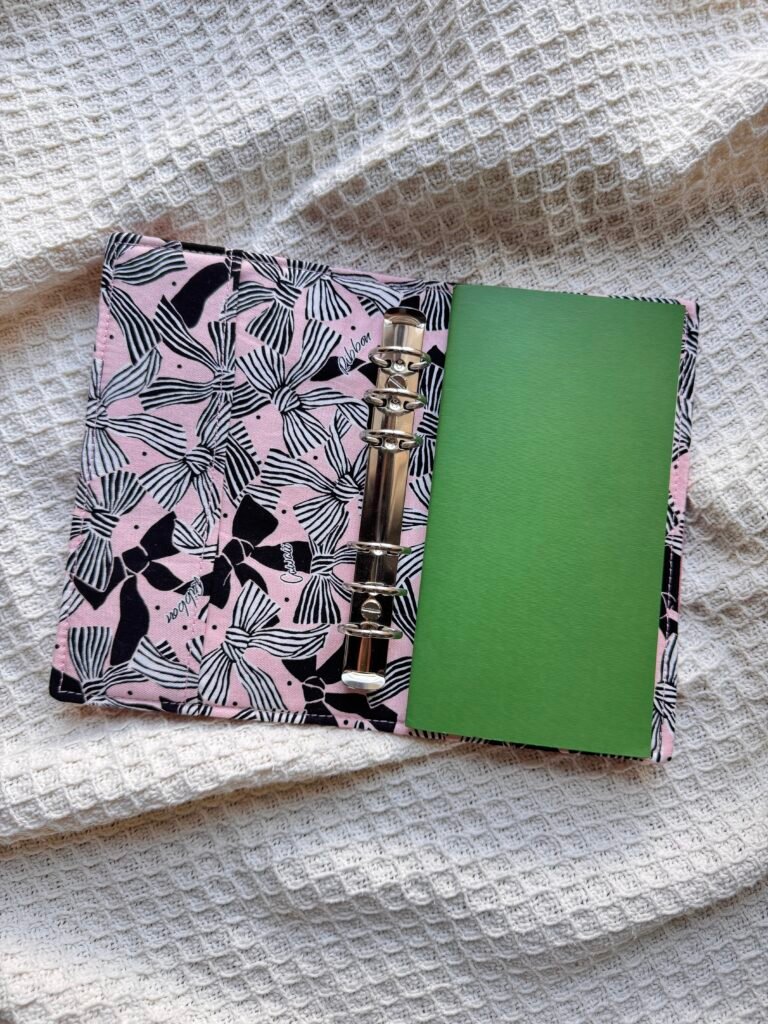
I use handmade travelers notebook covers for a reason: they make the experience feel sacred. They remind me that this time is for me. That I’m worth slowing down for. That it’s okay to pause, breathe, write, and just be.
In a world that demands constant output, journaling asks nothing from you—except your truth.
Final Thoughts: Journaling Isn’t a Fix—It’s a Friend
I’m not here to tell you that journaling will fix your life. It won’t. But it will help you live it more honestly.
It will meet you in the messy middle.
It will hold space for your contradictions.
It will gently show you patterns, truths, and possibilities.
And some days, it might even help you breathe again.
“What do I wish I hadn’t done today?”
And see what shows up.
It might just be the beginning of a very honest, healing conversation—with yourself.